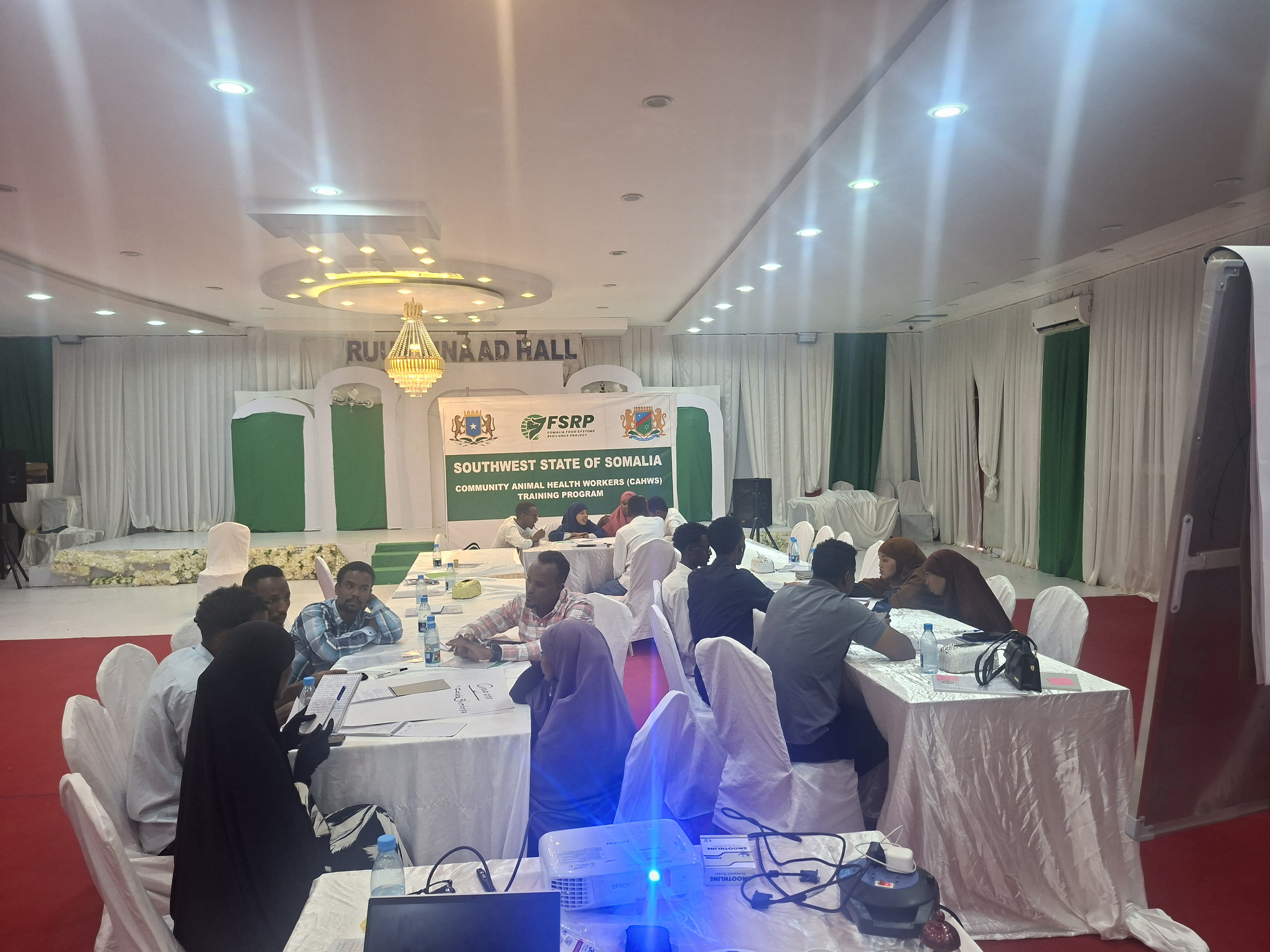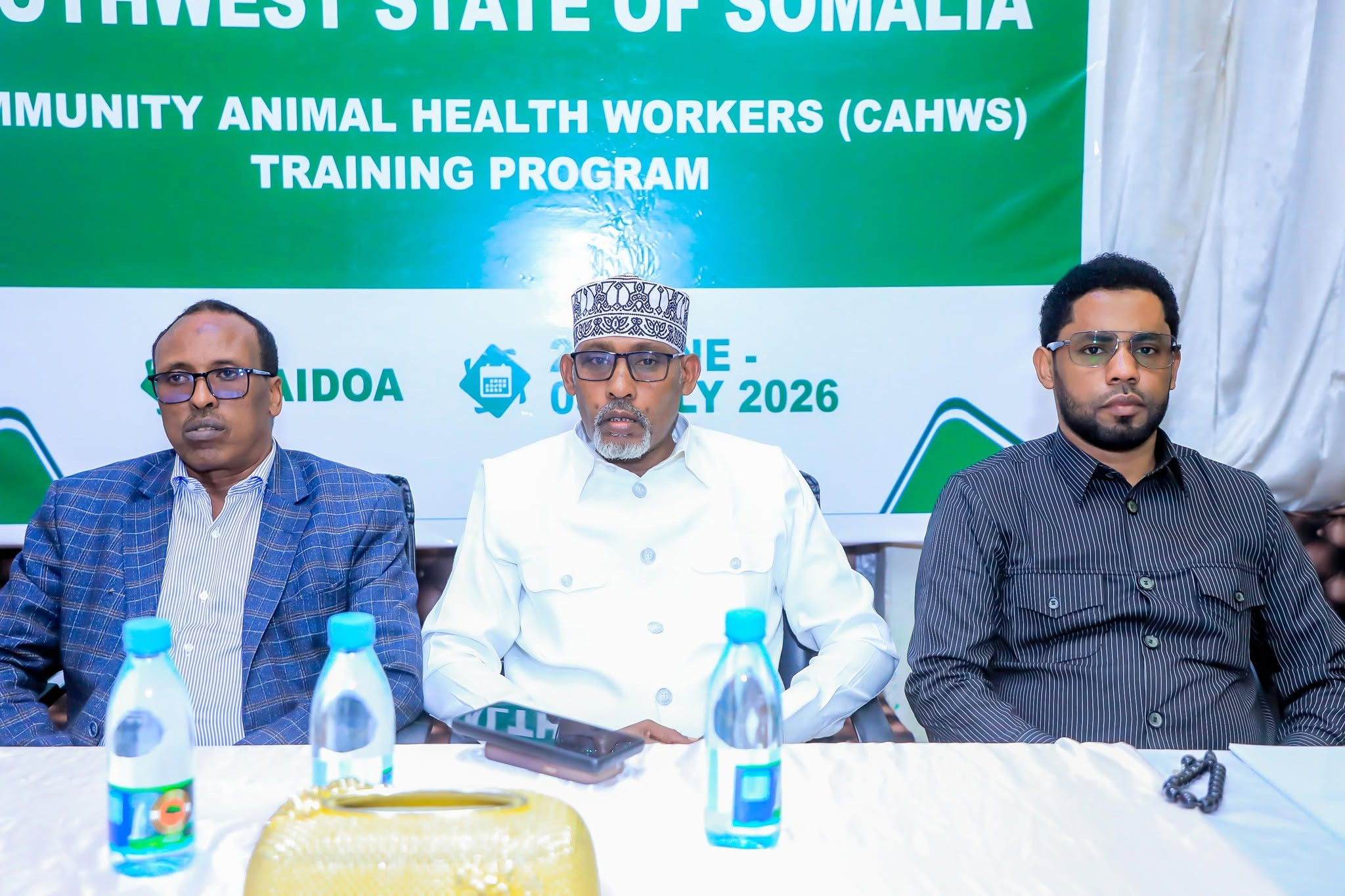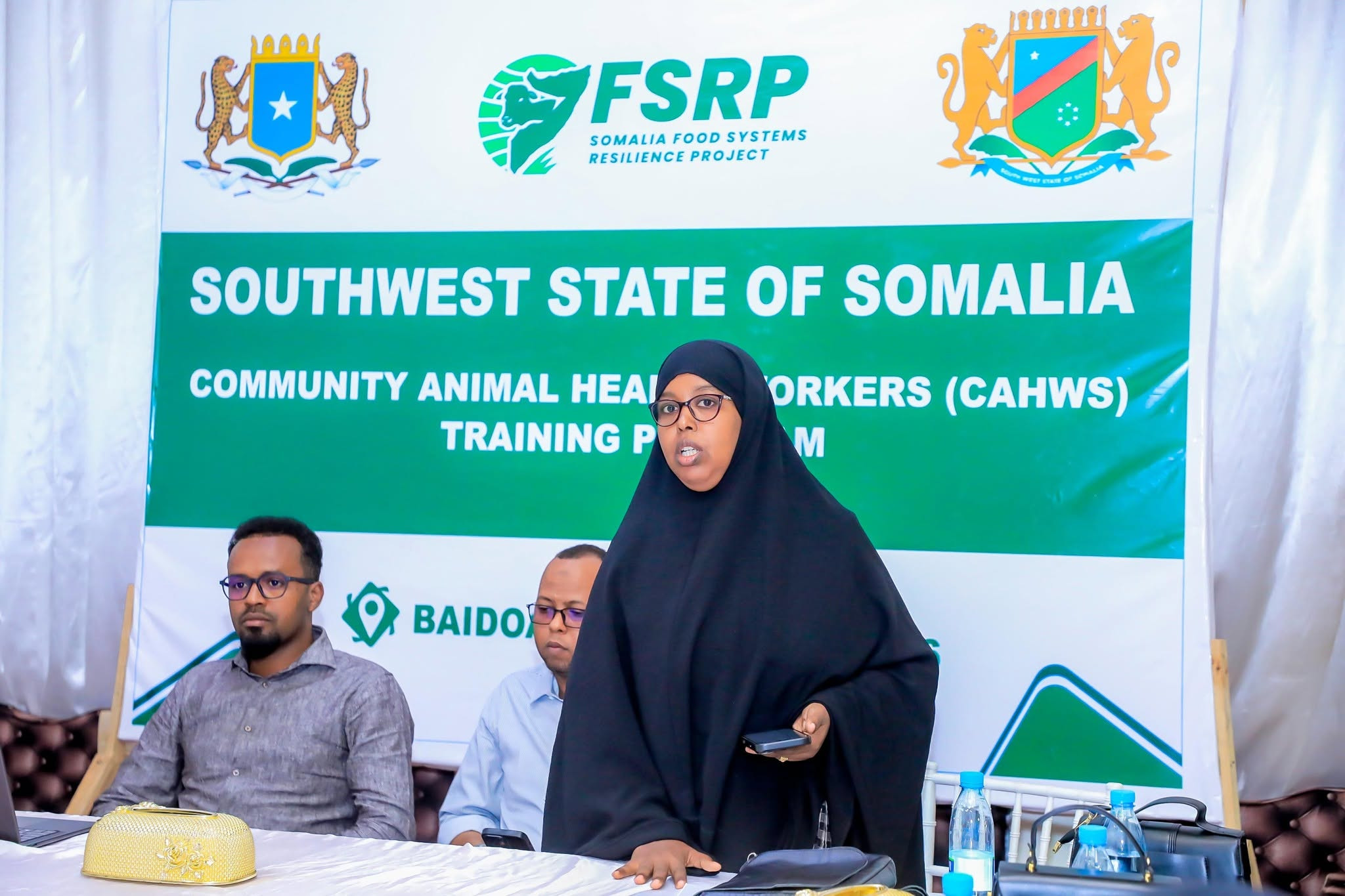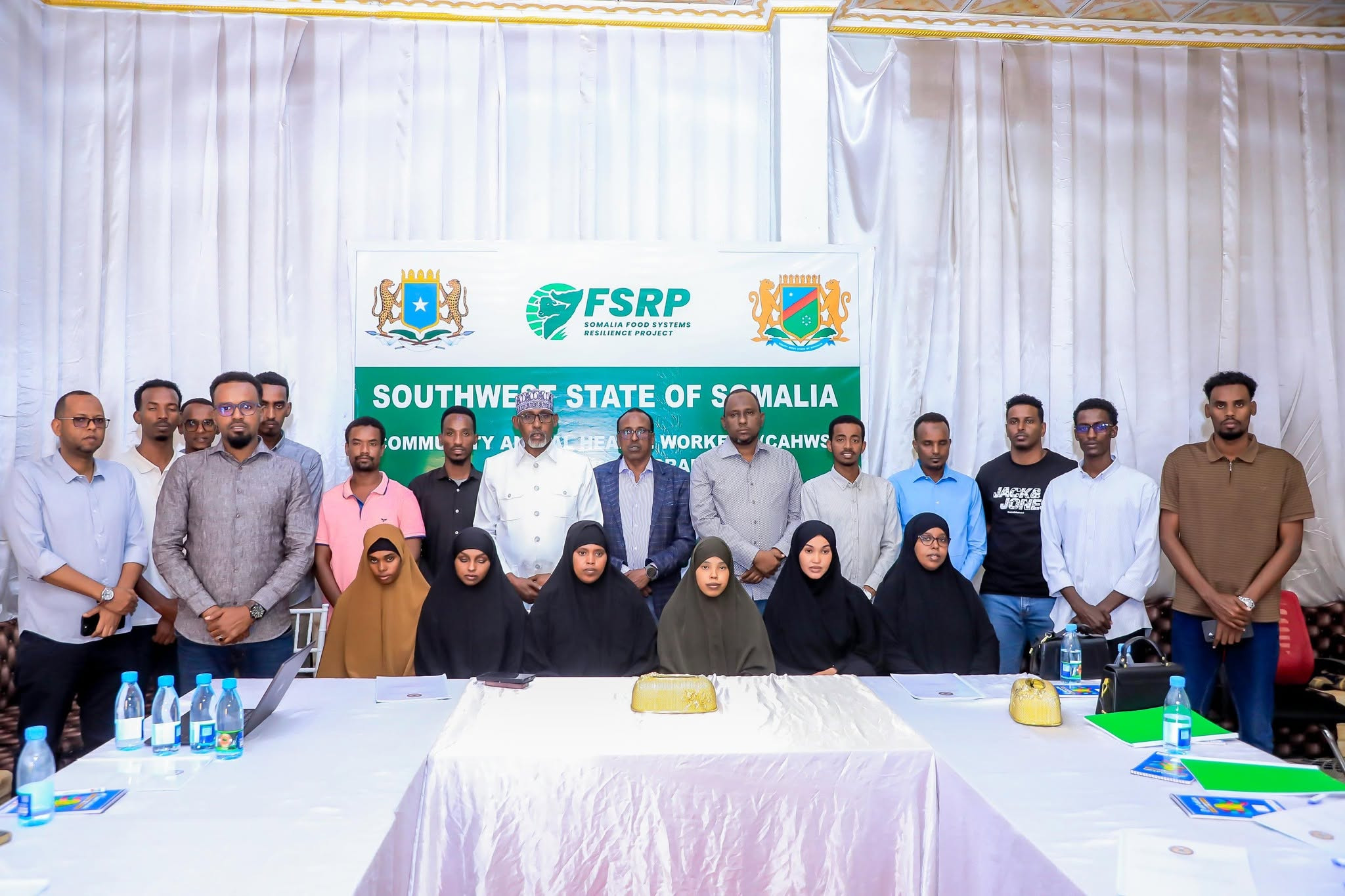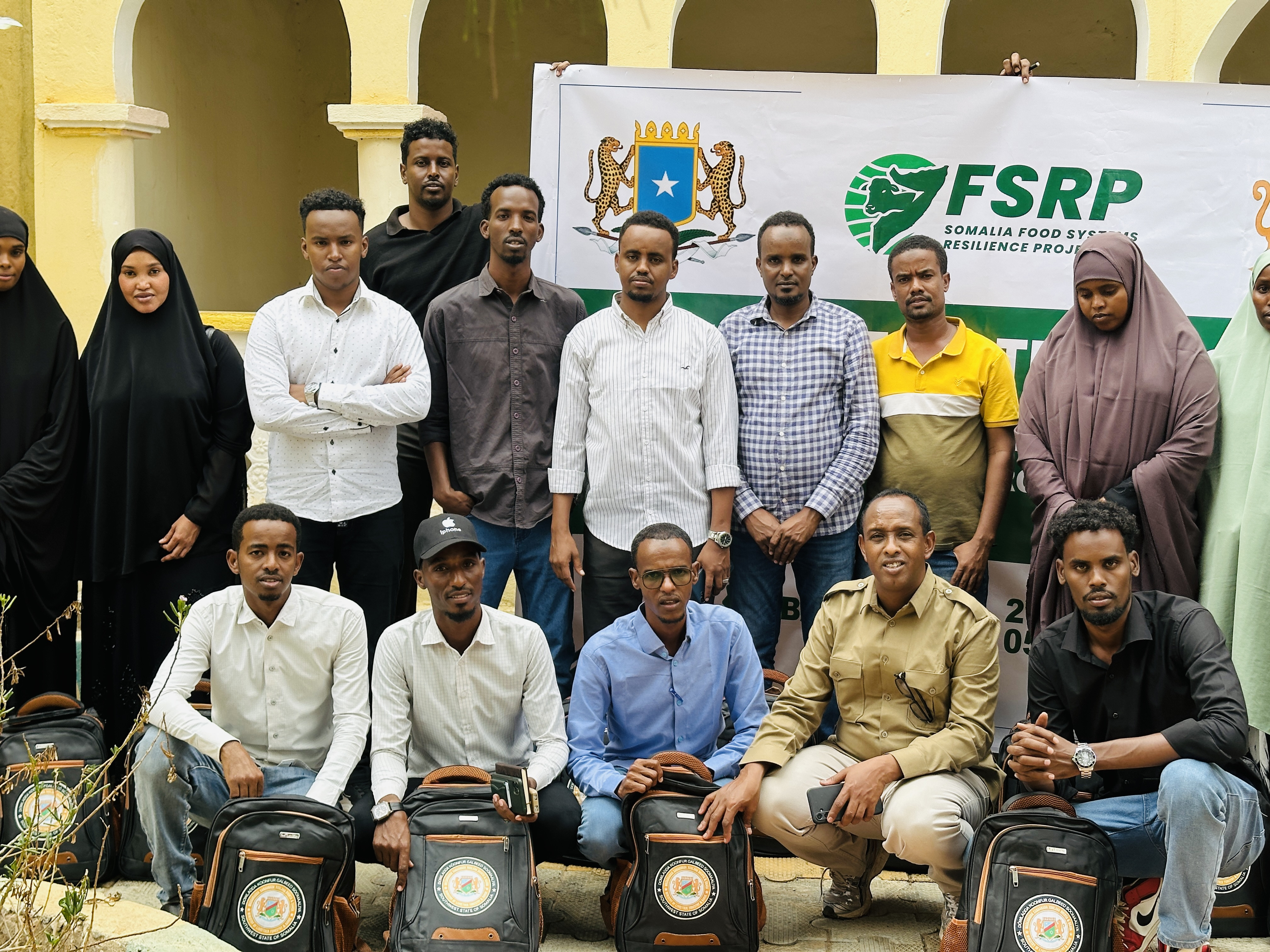
The Somalia Food Systems Resilience Program (FSRP), funded by the World Bank, has successfully completed a 14-day intensive training program for Community Animal Health Workers (CAHWs) in South West State, marking another milestone in strengthening livestock health services and building resilience among pastoral communities.
The training brought together 22 participants from nine FSRP-supported districts, equipping them with the technical knowledge and practical skills needed to deliver quality animal health services at the community level. The initiative is part of the FSRP's broader efforts to improve livestock productivity, protect rural livelihoods, and enhance food systems resilience across Somalia.
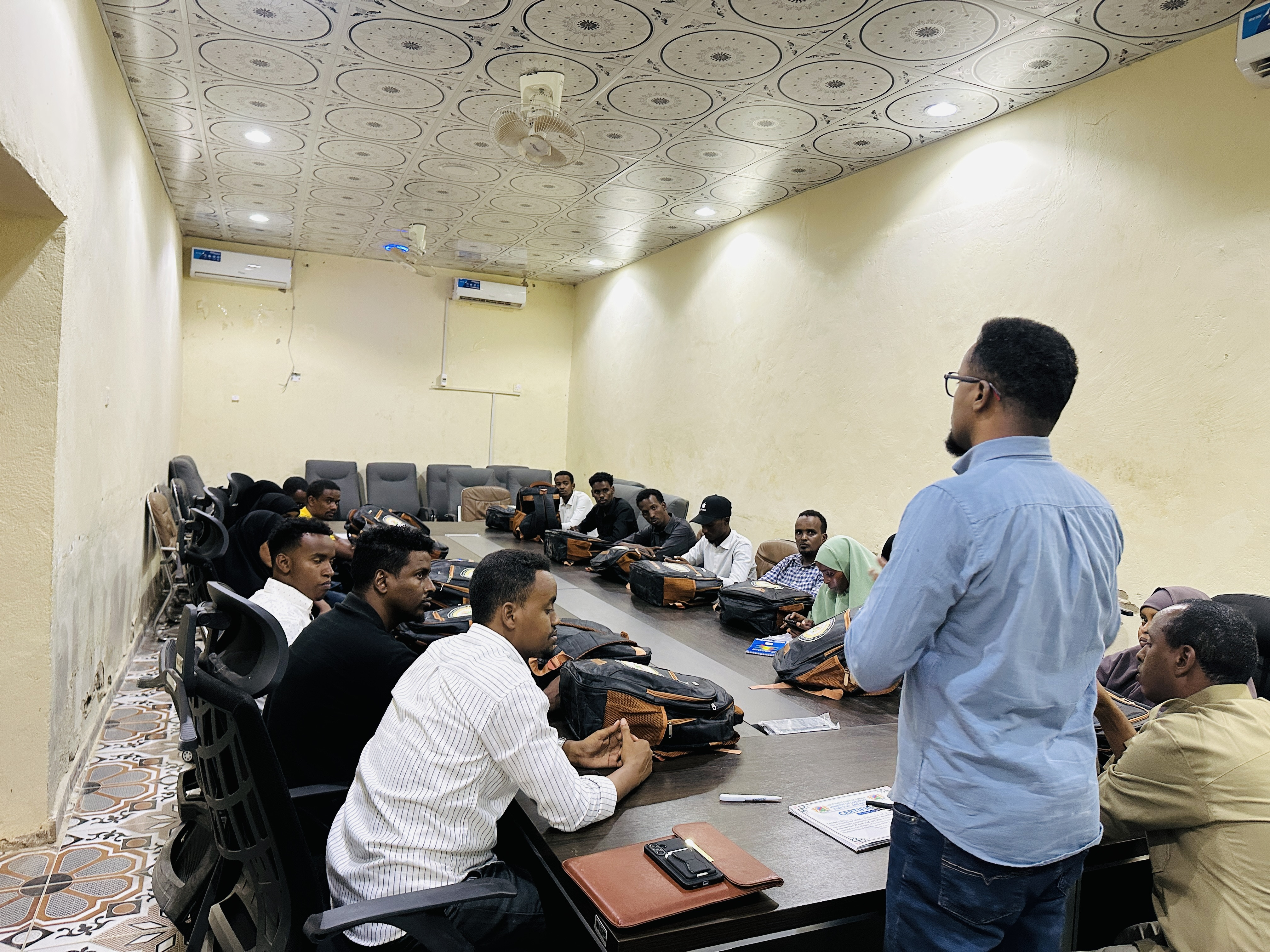
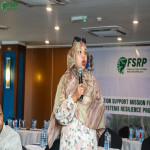
Throughout the two-week program, participants received both classroom instruction and hands-on practical training covering a wide range of animal health topics, including disease surveillance and reporting, animal husbandry, vaccination techniques, treatment protocols, biosecurity, livestock nutrition, record keeping, community awareness, and professional ethics. Practical demonstrations and group exercises enabled trainees to apply their newly acquired skills to real-life field scenarios.
The training also fostered collaboration among participants from different districts by promoting experience sharing and peer learning. Continuous assessments and practical evaluations showed significant improvements in participants' technical competencies and their readiness to provide frontline veterinary services within their communities.
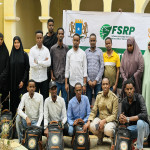
To support their work after graduation, each participant received a Community Animal Health Worker toolkit containing essential veterinary equipment and supplies. The toolkits will enable the newly trained CAHWs to immediately begin delivering basic animal health services, improving access to veterinary care in remote and underserved communities.
During the closing ceremony, all 22 participants were awarded Certificates of Completion in recognition of their successful participation and demonstrated competence as Community Animal Health Workers.
The training represents an important investment in local capacity development under the World Bank-funded Food Systems Resilience Program. By strengthening community-based animal health services, the initiative is expected to improve livestock health, reduce the impact of animal diseases, enhance pastoral livelihoods, and contribute to more resilient food systems across South West State.